Born
in Melbourne on 1 May 1932, Ronald George Monsbourgh came from a family
of architects.
His father, George Alfred Monsbourgh (1892-1991) had studied at the
Working Men's College (now RMIT) while serving his articles with Walter
Butler; he established his own practice in 1916 and retired just over
sixty years later, in 1978. George's elder brother, Alan Gordon
Monsbourgh (1888-1938), was well-known as Chief Architect to the
MMTB for two decades until his early death. Ron Monsbourgh
commenced his own architectural studies at RMIT and subsequently obtained
work in the private office of the school's Head of Architecture, Harry
Winbush. Monsbourgh was still employed by Winbush when he
became registered as an architect during 1958. By the following year, however, he had transferred to the office of Cowper, Murphy & Associates.
In 1955, Monsbourgh married the former Barbara Cummings and the
couple settled in Beaumaris, in a new house that Monsbourgh
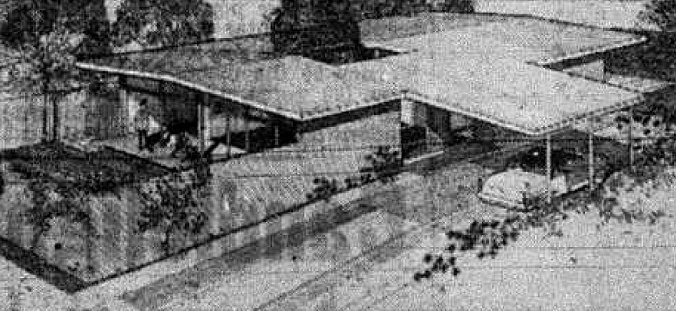
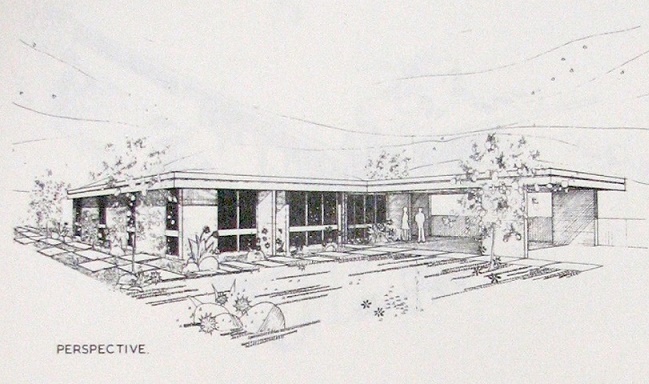
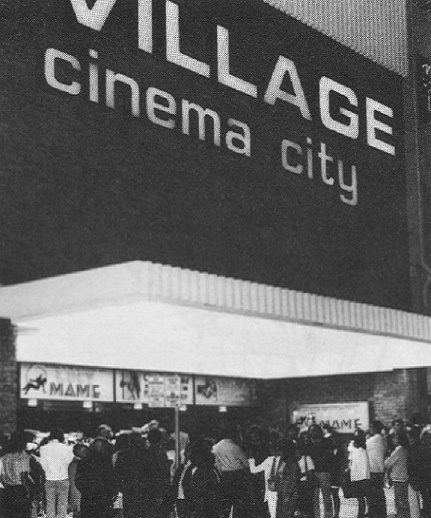
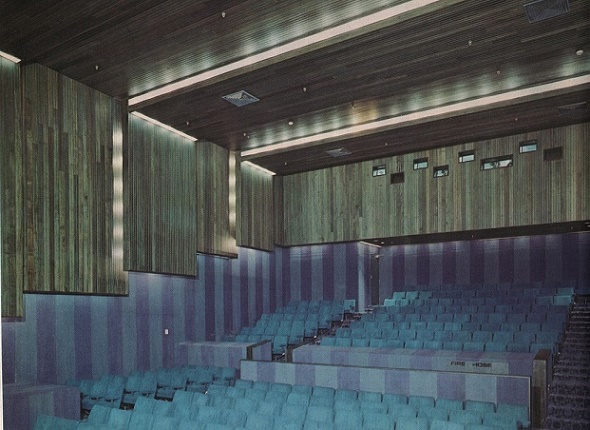
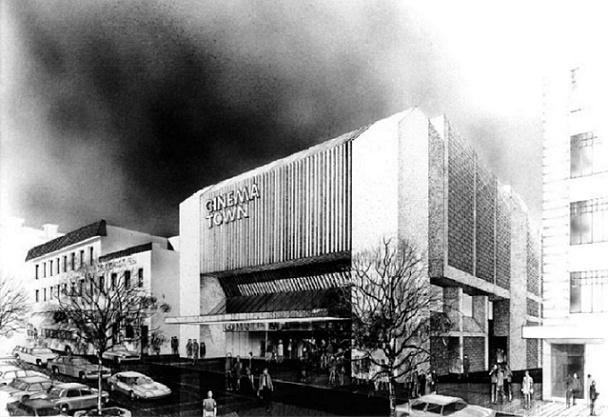
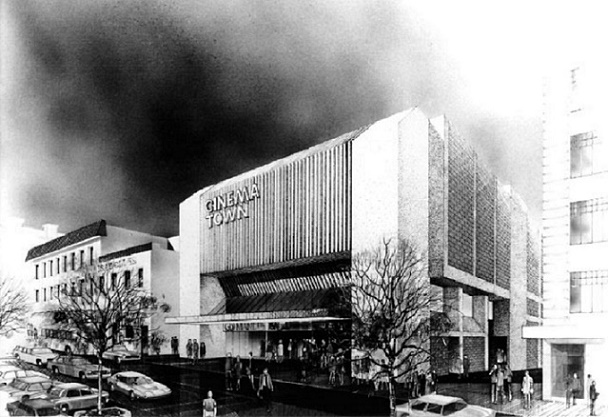
presumably designed himself. By the early 1960s, Monsbourgh had been promoted to an associate with Cowper, Murphy & Associates, while also undertaking a few private residential projects under his own name. Following the retirement of Gordon Murphy (whose name was removed from the architects' register during 1964), Monsbourgh took over the practice, remaining in the same office at 45 Grey Street, East Melbourne, but rebranding the firm as R G Monsbourgh & Associates. The new firm's output was broad, encapsulating residential, commercial and industrial work, the latter encapsulating a fruitful association with businessman Herbert Toohey, for whom Monsbourgh designed factories in the industrial heartlands of Moorabbin, Oakleigh and Sunshine. In 1968, he was commissioned to design the new laboratory wing at the Victorian College of Pharmacy in Parkville - a substantial addition to a major complex on which Monsbourgh had worked in his early days with Gordon Murphy almost a decade before. In 1969, Monsbourgh garnered success in a competition held by the RAIA Small Homes Service, and his prize-winning house was built in Vermont South as part of the heralded display village known as the “Blue Flame Project”. His plan was subsequently introduced into the SHS range as standard design V438, and remained popular thereafter, being republished in the weekly column several times well into the 1970s. For all his achievements in residential, industrial and instituional design, Monsbourgh became best known across Australia for his work with cinemas, a field in which he specialised for more than three decades. One of his first sole cinema projects, dating from 1965-66, was the remodelling of Walter Burley Griffin’s Capitol Theatre in Swanston Street. Having lapsed into benigh neglect in the post-war era, the iconic venue was under threat of being destroyed for commercial infill. Ultimately, it was decided instead to retain the cinema in a truncated form, with a new shopping arcade inserted underneath. While the arcade itself was designed by C Ian Turner, Monsbourgh was responsible for re-configuring the theatre above. An extremely complex task that involved gutting the stalls and extending the dress circle to create new stalls at a higher level, it was achieved in an artful and seamless fashion, with utmost respect to Griffin’s original design. Over the course of several decades, Monsbourgh undertook work for all three of Australia's post-war cinema chains (Village, Hoyts and Greater Union), encapsulating new purpose-built facilites and the refurbishment or upgrading of existing ones. His output in this sphere spanned the entire country (as well as New Zealand), and introduced such new developments as the first twin-screen cinemas in the early 1970s, and the first multiplex facilities in the mid-1980s. In February 1970, Monsbourgh re-structured his practice as a public company, R G Monsbourgh & Associates Pty Ltd, with himself as sole director and his wife Barbara as secretary. Two years later, he appointed one of his employees, Peter Stynes (a BArch graduate from the University of Melbourne in 1959) as co-director. In 1977, Monsbourgh entered into partnership with Nicholas Sofarnos (a one-time employee of Kenneth McDonald), and the firm continued as Sofarnos Monsbourgh Pty Ltd until 1997. A spin-off company, Cinecon Consultants International Pty Ltd, was established in 1993, and remained in operation until 1998. Ron and Barbara Monsbourgh, who had two sons, continued to reside in Melbourne's bayside area for many years, latterly in Brighton and finally in Black Rock. Diagnosed with cancer in 2005, Monsbourgh ded two years later, on 5 March 2007, at Prahran's Cabrini Hospital. Select List of Projects Ronald G Monsbourgh
R G Monsbourgh & Associates
|
| ||||||||||||||||||||||||||||
top |