The
prolific inter-war architectural partnership of Cowper, Murphy &
Appleford traced its origins back to the sole practice of Christopher Cowper
(1868-1954), who rose to prominence during the 1890s and
early 1900s. The firm amended its name in 1921 after two of
Cowper's staff were elevated to partnership: Gordon Murphy (1889-1967) and Reginald Appleford
(1888-1975). After Cowper's retired, the firm continued under its
two younger partners, who soon fostered expertise in cinema design.
Appleford left in August 1941, with a newspaper notice subsequently announcing
that the firm "under the style of Cowper, Murphy & Appleford, has
been dissolved by mutual consent". Murphy continued the
practice under the new name of Cowper, Murphy & Associates,
operating from the same office at 431 Bourke Street.
Appleford entered the Public Works Department,
where he remained until at least 1946. Around that time, he
was invited by former partner Gordon Murphy to assist in a major
project to rebuild the Regent Theatre following severe fire damage.
This re-connection seems to have encouraged Appleford to return
to private practice under his own name, taking up a seperate office
at 431 Bourke Street, whence Cowper, Murphy & Associates still operated. The
post-war practices of Reg Appleford and Gordon Murphy each focused on
work that had defined their respective pre-war outputs.
Appleford, who had been articled to eminent church architect
W P Connolly and assisted him in the completion of St Patrick's
Cathedral
in the 1930s, continued to concentrate on Roman
Catholic projects. Murphy, meanwhile, sustained his
speciality in
cinemas, including design of new facilities as well as the
alteration,
upgrading and rebuilding of existing ones. This
work not only spread across
the Melbourne metropolitan area and regional Victoria, but also
interstate, with a branch office of Cowper, Murphy & Associates
opened in Sydney by 1945. The Melbourne office also completed a
few smaller-scaled residential commissions. Some of these houses
were designed by Gordon
Murphy's son
John (1920-2004), who worked in the office while studying
architecture in the late
1940s.
Around that same time, John and his future wife (and fellow
architecture undergraduate) Phyllis Slater (1924-2025) remodelled
the elder Murphy's house in Malvern East, coverting it into two self-contained flats. While Gordon
Murphy expressed a desire for his son to take over the
firm, John opted instead to establish his own practice in partnership
with Phyllis, which commenced after their marriage in 1950.
In
the early 1950s, as office space in central Melbourne became more
expensive, a number of well-established city architectural firms
relocated to the periphery of the CBD, such as East Melbourne, Jolimont
and St Kilda Road. In 1952, Cowper, Murphy & Associates moved
to East Melbourne, initially occupying a small single-storey terrace
house at 5 Albert Street before moving to a larger two-storey terrace
house at 45 Grey Street by 1958. Over this decade, the firm's
output diversified and their profile rose sharply. A 1953 scheme
for a seven-storey city office building for the Federated
Pharmaceutical Society attracted considerable press coverage,
reportedly being the first major privately-owned building erected in
the CBD since WW2, and one of the first of
the slick curtain-walled office blocks that would transform the city's
streetscapes in the 1950s. Completion of the building also
prompted a follow-up commission for the new Victorian College of
Pharmacy in Royal Parade, Parkville, effectively a miniature
university campus. Sadly, one of Murphy's key staff members,
Kenneth Varley (1926-1959) died tragically as the college neared
completion. Around that same time, the office was joined by
Ronald Monsbourgh (1932-2008), who would rise to the
position of associate.
With
the opening of the College of
Pharmacy in 1960, few new commissions came into Murphy’s
office. As his grandson Nick has noted, the twinning of the
Forum Theatre in Flinders Street (to create two smaller theatres)
represented the firm’s final foray into theatre work. Gordon
Murphy retired soon after, with his name removed from the ARBV register
during 1964. Ron Monsbourgh carried on the practice
from the same premises at 45 Grey Street, albeit rebranded as R G
Monsbourgh & Associates. Not long after Murphy's death
in 1967, Monsbourgh accepted a follow-up commission from what had been
one of the firm's most important post-war clients: a
major addition to
the College of Pharmacy. Murphy's legacy otherwise resonated
as Monsbourgh continued the focus on cinema work, rising to become
one of country’s leading specialists in the field in the 1970s and
‘80s.
Select List of
Projects
Cowper Murphy & Associates
1943-45
1944-45
1945
1945-47
1947
1948
1949
1950
1953
1953-54
1954
1954-55
1954-56
1954-60
1955-56
1956
1957
1958
1962
| Rebuilding of Regent Theatre, 49 Lydiard Street, Ballarat
Extensions o St John's Hall, Heidelberg Repatriation Hospital, Heidelberg
Alterations to Empire Theatre, Quay Street, Sydney, NSW
Rebuilding of Regent Theatre, Collins Street, Melbourne
Alterations to Esquire Theatre, Pitt Street, Sydney, NSW
Castle Theatre, South Street, Granville, NSW
Alterations to Palace Theatre, Pitt Street, Sydney, NSW
Additions to residence, Toorak
Crest Theatre, 157 Blaxcell Street, Granville South, NSW
Residence, Alphington
Residence, Point Nepean Road, McCrae
Residence, Moonga Road, Toorak
Hall for the Sunshine City Band, Parsons Reserve, Sunshine [destroyed 2006]
Office building for Federated Pharmaceutical Society, St Francis Street, Melbourne
St Patrick's Hall, Koroit
New Theatre, 35 Bank Street, Port Fairy
Croydon Village Drive-In Cinema, Whitehorse Road, Croydon
Festival Hall (Reconstruction of Western Stadium), Dudley Street, West Melbourne
Victorian College of Pharmacy, Royal Parade, Parkville
Theatre for Melbourne Little Theatre Company, St Martins Lane, South Yarra
Residence, Hawthorn
Orana Theatre, 21 Reid Street, Wangaratta
Memorial Theatre, 149 Commercial Road, Koroit
Amenities building and offices, Oakleigh Municipal Abattoirs, North Road, Oakleigh
Additions to St Patrick's Hall, Koroit
Additions and alterations to Mechanics' Institute, Kerang
Barclay Theatre (renovation of former King's Theatre), 133 Russell Street, Melbourne
Alterations to Forum Theatre, Flinders Street, Melbourne |
Reginald W Appleford
1948-
1951
1952
1952-53
1953
1954
1960
| Additions to Nazareth House, Cornell Street, Camberwell East
St Patrick's RC Church, Princes Highway, Mount Moriac
Our Lady of Fatima RC Primary School, Dunnstown
Boyce Hall, Fintona Grammar School, Balwyn Road, Balwyn [with J & P Murphy]
Infants Wing, St Joseph’s Orphanage, 208‐240 Grant Street, Sebastopol
Chapel and noviate wing, Sisters of Mercy Convent, Victoria Street, Ballarat
Additions to St Aidan's Orphanage, St Aidans Road, Kennington (Bendigo)
Additions to St Columba's RC School, Armstrong Street North, Ballarat
Memorial Assembly Hall, Caulfield Grammar School, Caulfield [destroyed by fire] |
| | 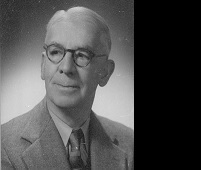 | | Gordon Murphy, late in his life
Source: Murphy family collection
(Courtesy Nick Murphy)
|
| 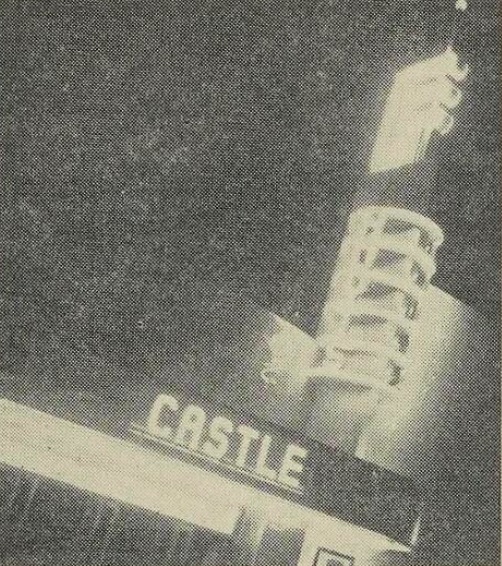 | | Castle Theatre, Granville, NSW (1947)
|
| 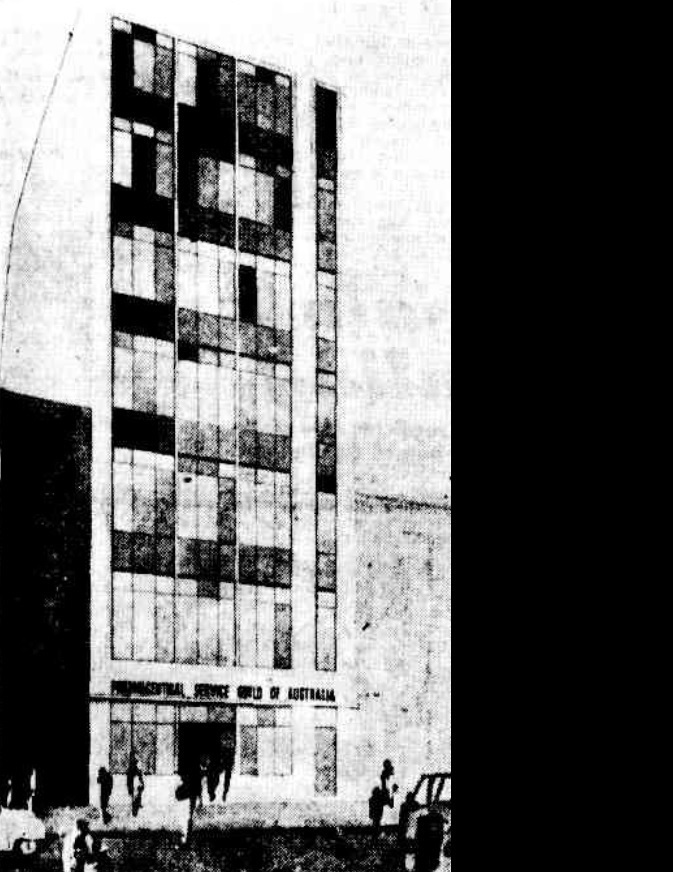 | | Guild House, St Francis Street, Melbourne (1953-54) |
| 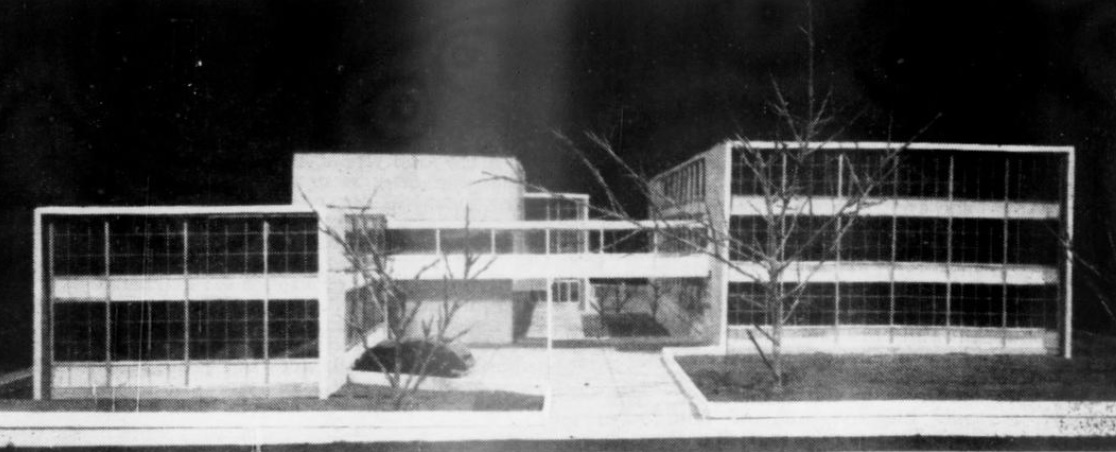 | | Victorian College of Pharmacy, Parkville (1954-60) |
| Select References
Nick Murphy, "Melbourne's Grand Theatre Palaces", blog post, dated 10 Mar 2019. <<www.forgottenaustralianactresses.com>>
Tony Tibballs, "Grand Designers: Cowper, Murphy & Appleford", Cinema Record, No 108 (Dec 2020).
Acknowledgements
Special thanks to Gordon Murphy's grandson, Nick
Murphy, for kindly sharing his research and granting permission to
reproduce the portrait photograph from the family's private
collection.
| | |
|
